

Attic Mold Removal in Holland, MI
Holland's proximity to Lake Michigan sustains year-round humidity that pressures attic spaces, where moisture accumulates in older homes with crawl spaces or basements lacking proper ventilation or sealing. Attic mold removal becomes critical when trapped moisture promotes growth in these upper zones, affecting both structural integrity and indoor air quality. Ware Mold Remediation connects Holland property owners with local independent providers who assess and remove attic mold, helping restore a healthier home environment.
What gets cleaned in an attic, and what comes out
The honest answer to “does this come out, or can it be cleaned?” turns on two things — what the material is, and how many square feet are affected. Those are the two axes of the EPA’s own remediation table, reproduced below for the materials usually found in an attic.
| Material | Under 10 sq ftabout a cabinet door, or one ceiling tile | 10 to 100 sq ftroughly one wall, or a small bathroom | Over 100 sq ftmore than one room's worth of surface |
|---|---|---|---|
| Wood surfacesroof sheathing, rafters and trussesEPA, Table 2 | Wet vacuumDamp wipeHEPA vacuum | Wet vacuumDamp wipeHEPA vacuum | Wet vacuumDamp wipeHEPA vacuumRemove and discard |
| Wallboardthe ceiling drywall below, seen from aboveEPA, Table 2 | HEPA vacuum | HEPA vacuumRemove and discard | HEPA vacuumRemove and discard |
What those methods mean, in EPA's words
- Wet vacuum
Wet vacuums are vacuum cleaners designed to collect water. They can be used to remove water from floors, carpets and hard surfaces where water has accumulated.
EPA, cleanup methods- Damp wipe
Mold can generally be removed from nonporous (hard) surfaces by wiping or scrubbing with water, or water and detergent.
EPA, cleanup methods- HEPA vacuum
HEPA (High-Efficiency Particulate Air) vacuums are recommended for final cleanup of remediation areas after materials have been thoroughly dried and contaminated materials removed.
EPA, cleanup methods- Remove and discard
Building materials and furnishings that are contaminated with mold growth and are not salvageable should be double-bagged using 6-mil polyethylene sheeting.
EPA, cleanup methods
Removed and replaced, whatever the area
- Fiberglass or other insulation — batt or blown insulation across the attic floor.
Fiber glass, or any other insulation material that is wet or visibly moldy (or if an unacceptable odor is present) should be removed and replaced by a qualified heating and cooling system contractor.
EPA, air duct cleaningEPA states this in its heating-and-cooling guidance and it is quoted here as written. Its water-damage table reaches the same conclusion for both fiberglass and cellulose insulation. - Insulated air ducts — insulated HVAC ducts run through the roof space.
If you have insulated air ducts and the insulation gets wet or moldy it cannot be effectively cleaned and should be removed and replaced.
EPA, air duct cleaningThe affected runs are what get replaced — not necessarily the whole system.
These guidelines are for damage caused by clean water. If you know or suspect that the water source is contaminated with sewage, or chemical or biological pollutants, then Personal Protective Equipment and containment are required by OSHA.
EPA, Table 1Porous materials that are wet and have mold growing on them may have to be discarded.
EPA, cleanup methodsMold can grow on wood, drywall, carpet and furniture if they remain wet for more than 24 hours.
EPA, flood cleanup
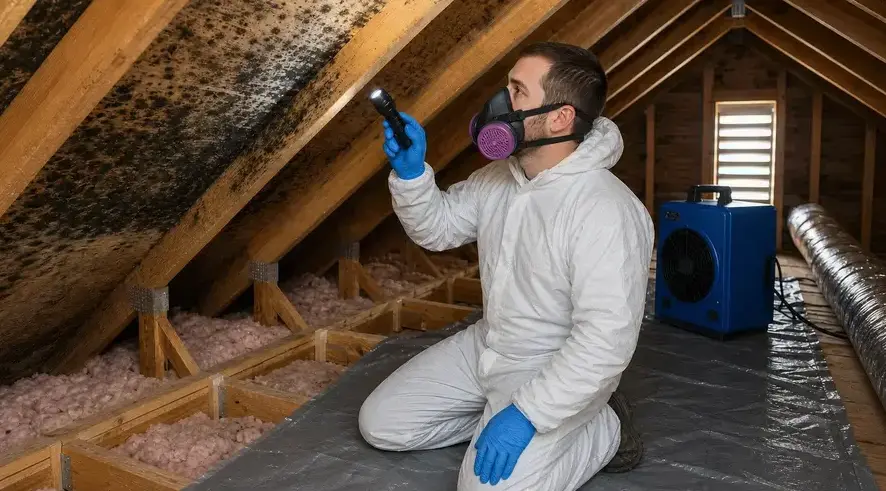
Attic mold is usually a ventilation fault rather than a leak — most often a bathroom fan discharging into the attic, or soffit vents blocked by insulation. The sheathing and rafters are wood, so they can often be cleaned and kept. The insulation underneath them cannot, and nor can any insulated duct running through the space.
Holland spends about 122.8 nights a year at or below freezing, most of them in January. Cold surfaces are condensing surfaces, and an unheated space stays cold long after the air outside has warmed.Source: NOAA 1991-2020 Climate Normals, HOLLAND TULIP CITY AP, MI US station (2.9 mi from Holland)
Attic Mold Removal in Holland, Michigan
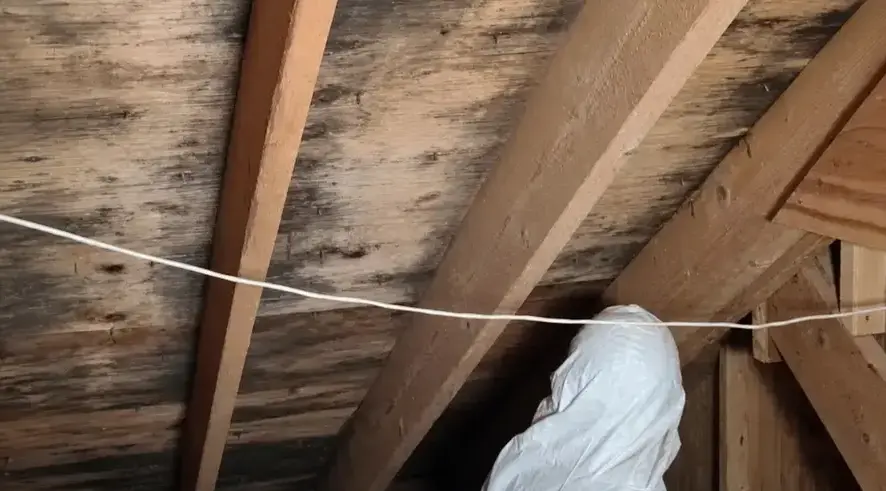
Holland's position near Lake Michigan creates persistent moisture challenges for homeowners year-round. The elevated humidity that characterizes the region doesn't simply arrive during wet seasons—it remains a steady pressure on indoor air quality throughout the year. Many older homes in Holland, including those in neighborhoods like Washington Square and Van Raalte, feature crawl spaces or basements where air circulation and moisture control become critical. When these areas aren't properly ventilated or sealed, humidity naturally migrates upward into the attic, where it condenses on wood framing, insulation, and roof decking. Attic mold growth follows, often undetected until damage becomes extensive or indoor air quality suffers.
Ware Mold Remediation connects Holland property owners with independent local providers who specialize in thorough attic mold removal. The process begins with a careful inspection to identify moisture sources, affected materials, and the full scope of contamination—critical steps because attic mold can hide behind insulation or in rafter cavities. Once the extent is clear, removal includes safe containment, proper disposal of affected materials, and restoration of healthy air barriers. Follow-up attention to ventilation and moisture control helps ensure conditions don't support regrowth. If you suspect attic mold in your Holland home, reaching out for a local inspection is the first step toward protecting both your property and your family's indoor air quality.
Why Holland Homeowners Choose Ware for Attic Mold Removal
Fast Local Attic Mold Removal
Ware connects you with independent local providers who respond quickly to attic mold removal requests in Holland. Fast response limits moisture damage and prevents mold from spreading deeper into your home's structure.
Thorough Attic Mold Removal Process
Attic mold removal through Ware's network includes complete inspection, containment, and removal tailored to your home's specific moisture patterns. Thorough treatment protects your attic and improves indoor air quality for your family.
Clear Communication About Attic Mold Work
Ware's local providers explain attic mold removal findings and next steps in plain language, so you understand the scope of work and what to expect throughout the remediation process.
Solutions for Holland's Humid Climate
Holland's location near Lake Michigan means persistent moisture pressure year-round—humidity that readily accumulates in attics and older home structures. Attic mold removal providers in Ware's network understand these moisture patterns and recommend ventilation and sealing strategies suited to the region's climate.
How Our Attic Mold Removal Process Works
Schedule Your Attic Mold Removal Visit
Contact Ware Mold Remediation to connect with an independent local provider who serves Holland. They'll arrange a time to inspect your attic for mold growth and moisture sources.
Attic Mold Assessment & Diagnosis
The provider examines your attic space, identifies mold presence and extent, and traces moisture entry points—often related to the elevated humidity that persists year-round in this region near Lake Michigan. This assessment guides the removal plan.
Attic Mold Removal & Moisture Control
The independent provider removes affected materials, cleans and treats affected surfaces, and addresses ventilation or moisture barriers in your attic to reduce conditions that allow mold to return. Follow-up communication ensures the work meets your expectations.
Dealing with Attic Mold Removal in Holland? Get fast, professional help.
Call Now — (616) 779-5546Attic Mold Removal Across Holland Neighborhoods
Holland's proximity to Lake Michigan creates year-round moisture conditions that put attics under persistent pressure. The lake's influence keeps humidity elevated throughout the seasons, and this constant dampness finds its way into attic spaces where ventilation gaps, inadequate insulation, or roof leaks allow moisture to accumulate. Older homes in neighborhoods like Van Raalte and Washington Square often have aging roof systems and attic framing that may not shed moisture as efficiently as newer construction, making attic mold growth a recurring concern in these established areas.
Attic mold thrives where humidity meets poor air circulation—a combination especially common in Holland properties where the surrounding moisture climate meets older structural conditions. Addressing mold in attic spaces requires thorough inspection, proper containment during removal, and restoration work that targets the moisture source itself. The independent local providers Ware Mold Remediation connects customers to understand how Holland's environment drives mold risk in attics and can develop removal and prevention strategies tailored to your home's specific layout and age.
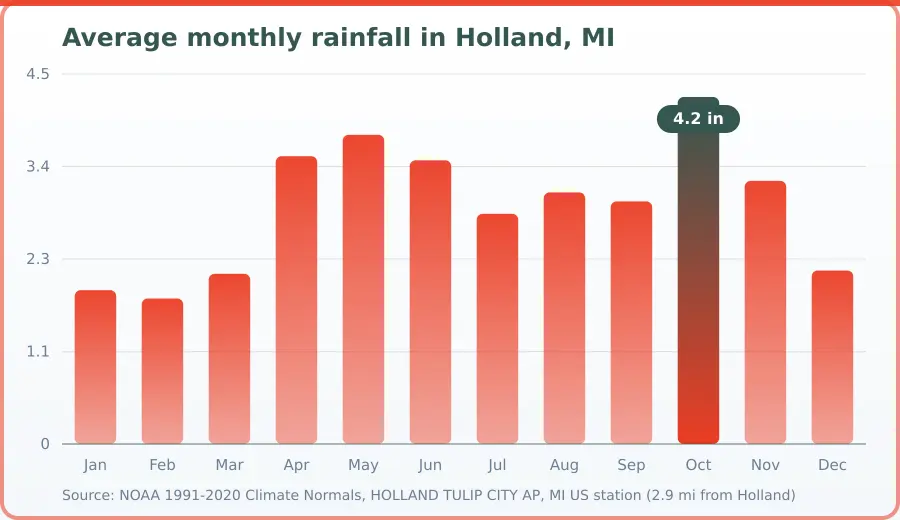
| Period | Monthly rainfall (in) |
|---|---|
| Jan | 1.9 |
| Feb | 1.8 |
| Mar | 2.1 |
| Apr | 3.5 |
| May | 3.8 |
| Jun | 3.5 |
| Jul | 2.8 |
| Aug | 3.1 |
| Sep | 3 |
| Oct | 4.2 |
| Nov | 3.2 |
| Dec | 2.1 |
Source: NOAA 1991-2020 Climate Normals, HOLLAND TULIP CITY AP, MI US station (2.9 mi from Holland). Retrieved October 5, 2026.
Attic Mold Removal Across Holland's Seasons
Spring: Thaw and Moisture Rise
Spring snowmelt and increased rainfall create conditions where attic mold thrives if ventilation is inadequate or roof leaks go undetected. Ware Mold Remediation connects property owners in Holland with local providers who inspect attics for hidden mold growth triggered by seasonal moisture buildup, addressing the problem before it spreads.
Summer: Humidity and Heat
Warm, humid summers accelerate attic mold development, particularly in homes where poor attic ventilation traps moisture despite clear weather. Local providers accessed through Ware Mold Remediation assess attic conditions, evaluate ventilation systems, and remove active mold before summer's heat compounds moisture retention problems.
Fall: Seasonal Pressure and Preparation
As Holland's lakeshore location keeps humidity levels elevated year-round, fall is an ideal time to have attics inspected before winter moisture pressures intensify. Many older homes in the area with crawl spaces or basements experience similar moisture concerns in attics; Ware Mold Remediation helps property owners identify and address attic mold before cold months trap moisture further.
Winter: Cold and Condensation
Winter temperature swings between heated interiors and cold attics create condensation that fuels attic mold growth if insulation and air sealing are inadequate. Ware Mold Remediation connects you with local providers who remove existing mold and help identify ventilation gaps that allow winter condensation to accumulate.
Attic Mold Removal FAQs — Holland, MI
Attic mold removal typically begins with inspection to identify affected areas and moisture sources. The provider will contain the work space, safely remove contaminated insulation and materials, clean and treat surfaces, and address the underlying moisture issue. After removal, the attic is evaluated for proper ventilation and may be re-insulated. The goal is complete removal and prevention of return.
Ware Mold Remediation helps connect you with local attic mold removal providers in Holland who can typically schedule inspections and discuss your situation promptly. Response times depend on the independent provider's current workload, but most aim to assess attic mold concerns within a reasonable timeframe. Contact Ware to get the process started right away.
Attic mold removal pricing depends on the extent of contamination, square footage affected, type and depth of materials involved, complexity of moisture remediation needed, and local labor factors. Removal of heavily saturated insulation costs more than treatment of surface mold. Each independent provider sets their own pricing based on the specific scope of work discovered during inspection.
Before attic mold removal, the independent provider will advise on preparation steps. Typically, you'll want to secure or move personal items stored in the attic, ensure access routes are clear, and possibly arrange temporary ventilation. The provider will set up containment and work protocols to minimize dust spread throughout your home. Confirm all preparation details during your pre-work consultation.
After removal, controlling moisture is key to preventing attic mold return. Ensure gutters and downspouts direct water away from your foundation, maintain proper attic ventilation, seal air leaks that allow warm indoor air to enter the cold attic, and monitor humidity levels. Address any roof leaks promptly. The independent provider can recommend ventilation upgrades specific to your home's needs.
Holland's proximity to Lake Michigan creates elevated humidity year-round that puts ongoing moisture pressure on homes. This persistent humidity—combined with older attics that may lack adequate ventilation—makes attic mold a genuine concern in the area. Many local homes with crawl spaces or basements below similarly trap moisture if not properly sealed and ventilated, raising indoor humidity that affects attics too.
Related Services
Homeowner Safety Toolkit
Verify Your Holland, MI Mold Remediation Company
Before you hire anyone, use these independent national resources to confirm credentials, standards, and track record.
IICRC
Publishes the S520 standard for professional mold remediation. Confirm a company's technicians hold real, current IICRC certification before you hire them.
Verify CertificationEPA
The federal government's own guidance on identifying, cleaning up, and preventing mold growth in a home.
Mold Prevention GuideBBB
Look up any mold remediation company's complaint history, customer reviews, and accreditation status — a free, independent check before you hire.
Check StandingDealing with Attic Mold Removal in Holland, MI? Call (616) 779-5546 for 24/7 help.
Call Now — (616) 779-5546Areas We Serve in Holland, Michigan
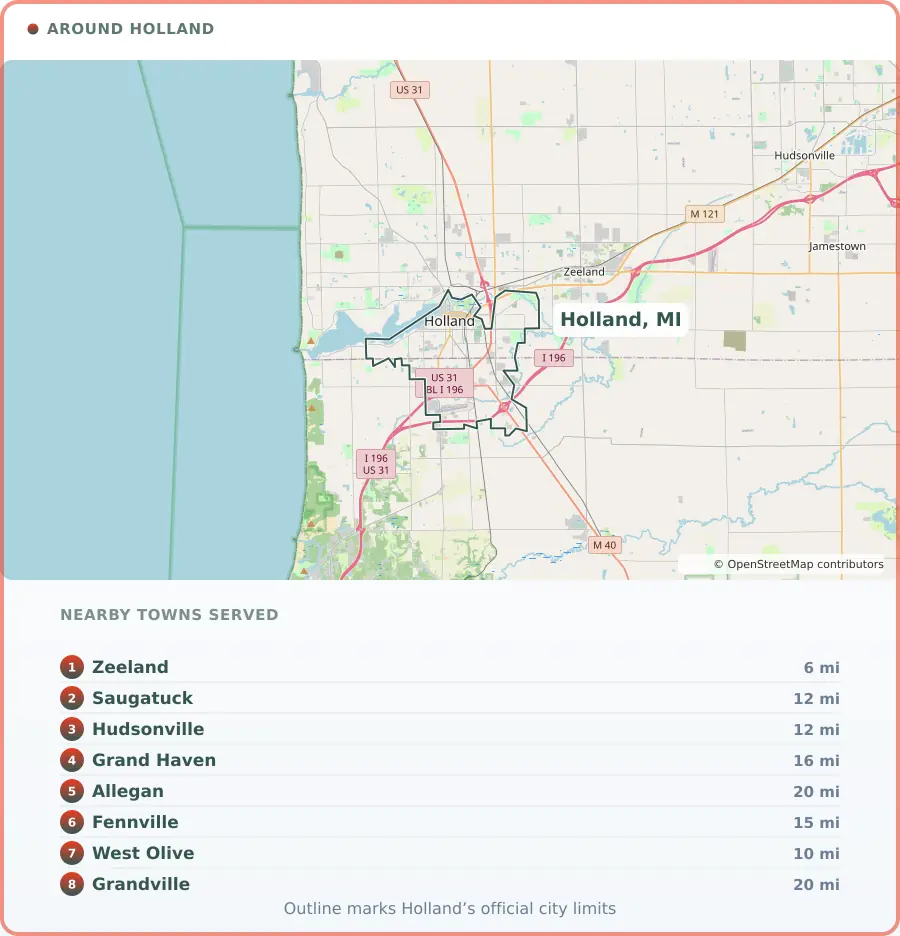
Based in Holland, MI, with 8 nearby communities inside the service area — near enough to reach quickly, not just listed on a map.
Holland, MI Information
Holland, Michigan sits along Lake Michigan's eastern shore, a city of roughly 34,000 with a strong manufacturing pulse. Haworth, LG Energy Solution, Gentex, and Magna keep advanced manufacturing, office furniture, and automotive and battery production humming, while longtime players like Padnos and ODL round out an industrial base built for the long haul. Hope College and Holland Hospital add steady education and healthcare jobs, and area farms and food processors tie the local economy back to the land.
Neighborhoods like Van Raalte and Holland Heights give the city a settled, homegrown feel, even as visitors pour in each spring for Tulip Time and summer afternoons at Ottawa Beach. It's a community where lakeshore tourism and shop-floor craftsmanship share the same zip code comfortably.

Photo: Billy Hathorn, CC BY-SA 3.0