

Ceiling Mold Removal in Holland, MI
Holland's proximity to Lake Michigan sustains high humidity throughout the year, creating conditions where moisture accumulates in homes faster than it can escape—particularly in older properties with crawl spaces or basements where ventilation and moisture barriers may be inadequate. Ceiling mold thrives in this persistent dampness, and once it takes hold overhead, it poses direct risks to indoor air quality and structural integrity. Ware Mold Remediation connects Holland property owners with local independent providers who specialize in identifying and safely removing ceiling mold, helping restore a healthier living environment.
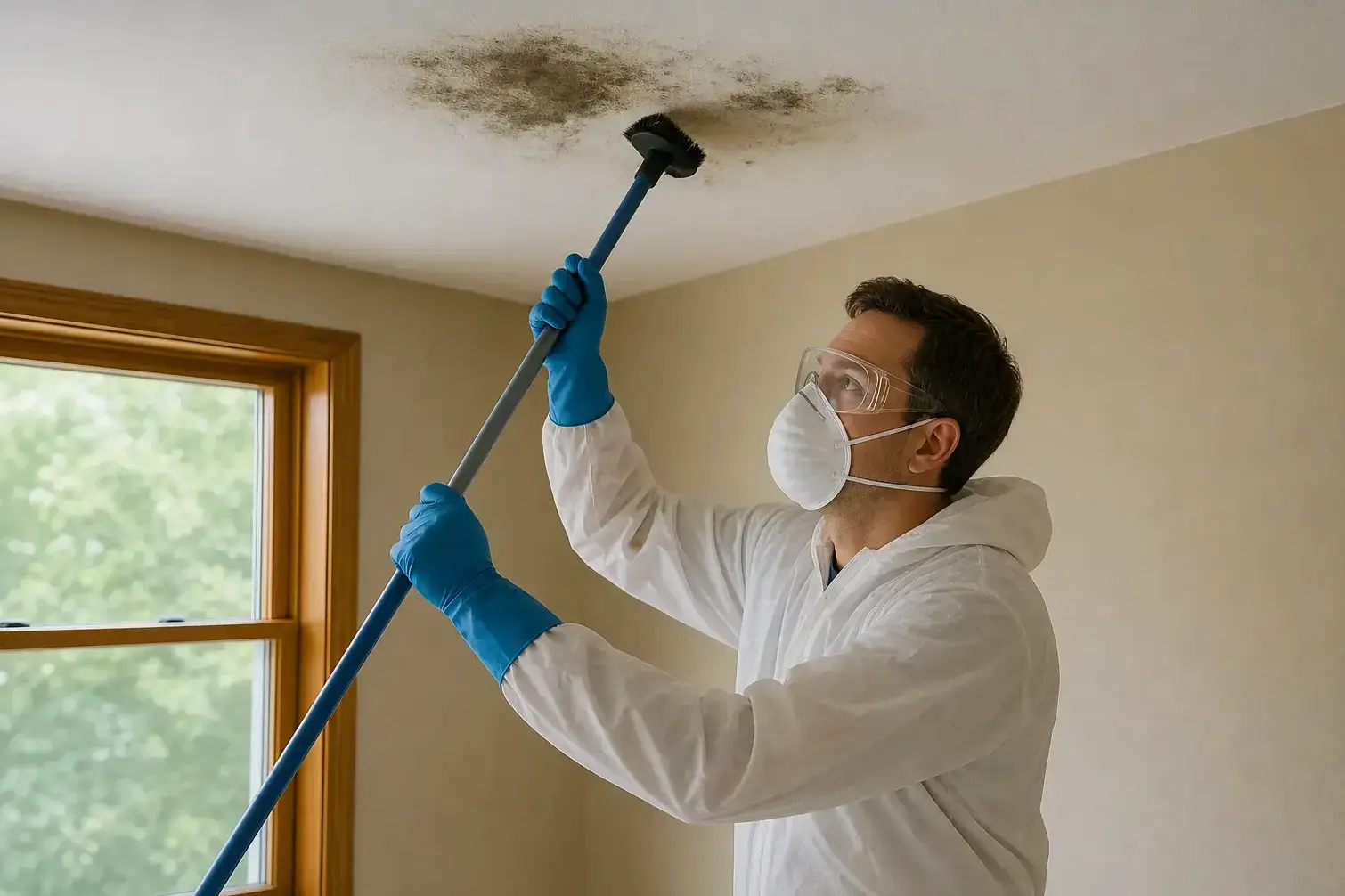
What gets cleaned on a ceiling, and what comes out
The honest answer to “does this come out, or can it be cleaned?” turns on two things — what the material is, and how many square feet are affected. Those are the two axes of the EPA’s own remediation table, reproduced below for the materials usually found on a ceiling.
| Material | Under 10 sq ftabout a cabinet door, or one ceiling tile | 10 to 100 sq ftroughly one wall, or a small bathroom | Over 100 sq ftmore than one room's worth of surface |
|---|---|---|---|
| Wallboardthe ceiling drywall itselfEPA, Table 2 | HEPA vacuum | HEPA vacuumRemove and discard | HEPA vacuumRemove and discard |
| Wood surfacesjoists and framing in the cavity aboveEPA, Table 2 | Wet vacuumDamp wipeHEPA vacuum | Wet vacuumDamp wipeHEPA vacuum | Wet vacuumDamp wipeHEPA vacuumRemove and discard |
What those methods mean, in EPA's words
- Wet vacuum
Wet vacuums are vacuum cleaners designed to collect water. They can be used to remove water from floors, carpets and hard surfaces where water has accumulated.
EPA, cleanup methods- Damp wipe
Mold can generally be removed from nonporous (hard) surfaces by wiping or scrubbing with water, or water and detergent.
EPA, cleanup methods- HEPA vacuum
HEPA (High-Efficiency Particulate Air) vacuums are recommended for final cleanup of remediation areas after materials have been thoroughly dried and contaminated materials removed.
EPA, cleanup methods- Remove and discard
Building materials and furnishings that are contaminated with mold growth and are not salvageable should be double-bagged using 6-mil polyethylene sheeting.
EPA, cleanup methods
Removed and replaced, whatever the area
- Ceiling tiles — drop-ceiling or acoustic tiles.
Discard and replace.
EPA, Table 1This is the action EPA's water-damage table gives for ceiling tiles. It is the one material here with no size threshold to weigh. - Fiberglass or other insulation — any insulation sitting on top of the ceiling.
Fiber glass, or any other insulation material that is wet or visibly moldy (or if an unacceptable odor is present) should be removed and replaced by a qualified heating and cooling system contractor.
EPA, air duct cleaningEPA states this in its heating-and-cooling guidance and it is quoted here as written. Its water-damage table reaches the same conclusion for both fiberglass and cellulose insulation.
These guidelines are for damage caused by clean water. If you know or suspect that the water source is contaminated with sewage, or chemical or biological pollutants, then Personal Protective Equipment and containment are required by OSHA.
EPA, Table 1Porous materials that are wet and have mold growing on them may have to be discarded.
EPA, cleanup methodsMold can grow on wood, drywall, carpet and furniture if they remain wet for more than 24 hours.
EPA, flood cleanup
Ceiling mold nearly always means water arriving from above — a roof, a supply or waste line, or a bathroom on the floor above. The ceiling is the symptom, so cleaning it without finding the source buys a few months at most. Drop-ceiling tile is the one material here with no decision to make: EPA's water-damage table lists it as discard and replace.
Heavy rain — an inch or more in a day — arrives in Holland on about 6.5 days a year.Source: NOAA 1991-2020 Climate Normals, HOLLAND TULIP CITY AP, MI US station (2.9 mi from Holland)
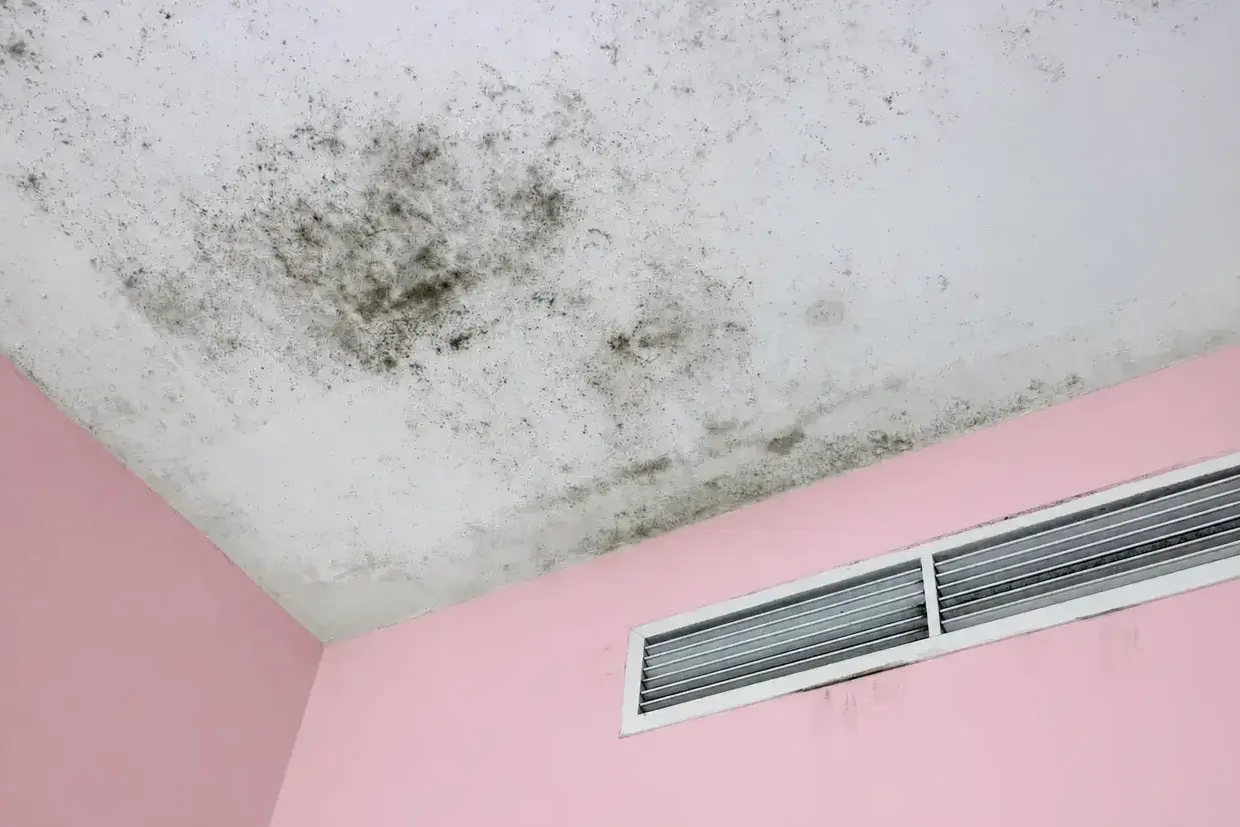
Ceiling Mold Removal in Holland, Michigan
Holland's proximity to Lake Michigan creates persistent moisture conditions that affect homes throughout the year. The elevated humidity typical of the lakeshore region combines with the construction patterns common in many of Holland's older properties—where crawl spaces and basements can trap moisture if ventilation and sealing are inadequate—to create an environment where mold growth on ceilings becomes a recurring concern for property owners. When moisture accumulates in attics, around roof penetrations, or above bathrooms and kitchens, ceiling mold can develop quickly and spread if not addressed promptly. Left untreated, it compromises both the structural integrity of ceiling materials and the indoor air quality of your home.
Ware Mold Remediation connects Holland property owners with independent local providers who specialize in ceiling mold removal, from initial inspection through complete remediation and prevention follow-up. These professionals focus on identifying moisture sources, containing affected areas safely, removing mold-damaged materials, and restoring ceilings to a clean, dry state. Rather than temporary fixes, the goal is thorough removal that addresses the underlying moisture problem so ceiling mold is less likely to return. Whether your home is in Washington Square, Van Raalte, or another part of Holland, our network makes it straightforward to find a local provider ready to restore your ceilings and peace of mind.
Why Holland Property Owners Choose Ware Mold Remediation
Fast Local Ceiling Mold Removal
Ware connects you with independent local providers who respond quickly to ceiling mold removal requests in Holland. Faster access means less time for mold to spread through your home's upper spaces.
Thorough Ceiling Mold Removal Process
Providers in Ware's network approach ceiling mold removal with systematic inspection, containment, and removal tailored to your home's specific conditions. Thorough work reduces the risk of incomplete treatment and recurring growth.
Clear Communication During Removal
When you work with a Ware-connected provider for ceiling mold removal, you receive straightforward explanations of what you're seeing, what caused it, and what remediation involves. Clarity helps you make informed decisions about your home.
Humidity Control & Ceiling Mold Removal
Holland's year-round moisture and older homes with crawl spaces or basements create conditions where humidity accumulates indoors. Effective ceiling mold removal must address the moisture source; Ware's network providers understand this connection and help tackle it at the root.
How The Ceiling Mold Removal Process Works
Connect with a Local Ceiling Mold Removal Provider
Tell us about the ceiling mold you've noticed, and we'll connect you with an independent local provider in Holland who handles ceiling mold removal. You'll hear from them quickly to schedule your inspection.
Get Your Ceiling Mold Assessed and Diagnosed
The provider inspects your ceiling to identify the mold, trace its moisture source, and determine the best removal approach. Holland's year-round humidity near Lake Michigan often keeps moisture levels elevated, making proper diagnosis essential to stop mold from returning.
Complete Safe Ceiling Mold Removal and Prevention
The provider removes the mold using containment and safe techniques, addresses the underlying moisture problem, and may recommend ventilation or sealing improvements to protect your ceiling long-term. Follow-up guidance helps you maintain dry conditions indoors.
Dealing with Ceiling Mold Removal in Holland? Get fast, professional help.
Call Now — (616) 779-5546Ceiling Mold Removal Across Holland's Neighborhoods
Holland's proximity to Lake Michigan creates year-round moisture conditions that put consistent pressure on indoor spaces. The combination of elevated humidity and seasonal weather patterns means that moisture can accumulate in ceiling cavities and upper-floor areas where ventilation is limited or where roof leaks develop. Older homes throughout neighborhoods like Washington Square and Van Raalte may have attics or upper crawl spaces with inadequate air sealing or insulation, conditions that allow warm, humid air to condense on cooler ceiling surfaces—an ideal environment for mold growth.
Ceiling mold can develop slowly and remain hidden behind finished surfaces until it becomes visible or begins to affect indoor air quality. Early signs include discoloration, soft spots in drywall, or a musty odor in upper rooms. When you notice these indicators, connecting with a local mold remediation provider through Ware Mold Remediation gives you access to independent inspectors and remediation specialists who understand how Holland's moisture dynamics affect homes in your area. They can identify the moisture source—whether roof infiltration, poor attic ventilation, or plumbing leaks—and address both the mold itself and the conditions that allowed it to develop.
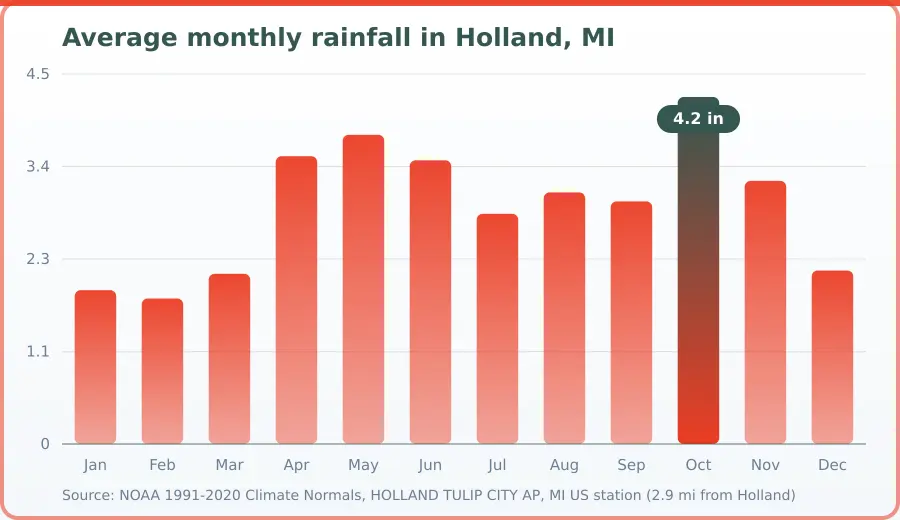
| Period | Monthly rainfall (in) |
|---|---|
| Jan | 1.9 |
| Feb | 1.8 |
| Mar | 2.1 |
| Apr | 3.5 |
| May | 3.8 |
| Jun | 3.5 |
| Jul | 2.8 |
| Aug | 3.1 |
| Sep | 3 |
| Oct | 4.2 |
| Nov | 3.2 |
| Dec | 2.1 |
Source: NOAA 1991-2020 Climate Normals, HOLLAND TULIP CITY AP, MI US station (2.9 mi from Holland). Retrieved October 5, 2026.
Seasonal Ceiling Mold Removal Needs in Holland, MI
Spring: Thaw and Moisture Rise
Spring snowmelt and increased rainfall elevate indoor humidity, causing ceiling mold to become visible as water seeps into attics and upper-story spaces. Ware Mold Remediation connects Holland property owners with local providers who inspect ceilings for active growth and moisture sources before conditions worsen.
Summer: Heat and Trapped Humidity
Summer heat accelerates ceiling mold spread in poorly ventilated attics and upper rooms where humidity collects year-round. Local providers reached through Ware Mold Remediation perform targeted inspections to identify hidden growth before it affects indoor air quality or structural integrity.
Fall: Persistent Moisture Pressure
Lake Michigan's proximity keeps humidity elevated throughout autumn, maintaining steady moisture pressure on older homes with crawl spaces or basements—conditions that trap humidity and promote ceiling mold growth if ventilation and sealing are inadequate. Ware Mold Remediation connects property owners with local specialists who assess upper-level moisture intrusion and recommend removal and prevention strategies suited to the region's persistent humidity profile.
Winter: Cold-Surface Condensation
Winter's temperature swings create condensation on cold ceiling surfaces, especially in attics and poorly insulated upper rooms, fueling ceiling mold expansion in unheated or inadequately sealed spaces. Ware Mold Remediation helps Holland residents find local providers who address winter-driven moisture accumulation and recommend long-term containment solutions.
Ceiling Mold Removal FAQs — Holland, MI
Ceiling mold removal begins with a thorough inspection to identify affected areas and moisture sources. The independent provider will contain the contaminated zone, remove affected ceiling materials or treat the surface depending on severity, address underlying moisture, and restore the area. The goal is complete removal while preventing spores from spreading to other parts of your home.
Ware Mold Remediation connects Holland property owners with independent local providers who can often respond quickly to ceiling mold concerns. Once you submit details about your situation, we match you with nearby professionals ready to assess and discuss next steps. Response times vary by provider availability and your specific timeline.
Pricing depends on the size of the affected ceiling area, how deeply mold has penetrated materials, whether underlying moisture damage exists, and what remediation method is needed. Whether drywall requires removal or surface treatment, HVAC involvement, and local labor rates all influence the final cost. Independent providers offer estimates based on your specific situation.
Before the provider arrives, move furniture and personal items away from the affected ceiling area if safe to do so. Keep household members and pets out of the workspace during removal. The provider will establish containment and explain any temporary ventilation or access needs. Follow their specific pre-service instructions for your home's layout and the mold location.
After removal, control indoor humidity and ensure proper attic or upper-floor ventilation to prevent moisture from re-accumulating. Fix any roof leaks, plumbing drips, or condensation sources immediately. The independent provider may recommend ongoing moisture monitoring or ventilation improvements specific to your ceiling's location and your home's construction.
Holland's lakeshore proximity keeps humidity levels persistently elevated throughout the year, creating ongoing moisture pressure inside homes. This year-round dampness makes ceilings—especially in older homes with crawl spaces or basements that trap humidity—vulnerable to mold if ventilation and moisture control aren't maintained. Managing indoor humidity is key to preventing ceiling mold growth.
Related Services
Homeowner Safety Toolkit
Verify Your Holland, MI Mold Remediation Company
Before you hire anyone, use these independent national resources to confirm credentials, standards, and track record.
IICRC
Publishes the S520 standard for professional mold remediation. Confirm a company's technicians hold real, current IICRC certification before you hire them.
Verify CertificationEPA
The federal government's own guidance on identifying, cleaning up, and preventing mold growth in a home.
Mold Prevention GuideBBB
Look up any mold remediation company's complaint history, customer reviews, and accreditation status — a free, independent check before you hire.
Check StandingDealing with Ceiling Mold Removal in Holland, MI? Call (616) 779-5546 for 24/7 help.
Call Now — (616) 779-5546Areas We Serve in Holland, Michigan
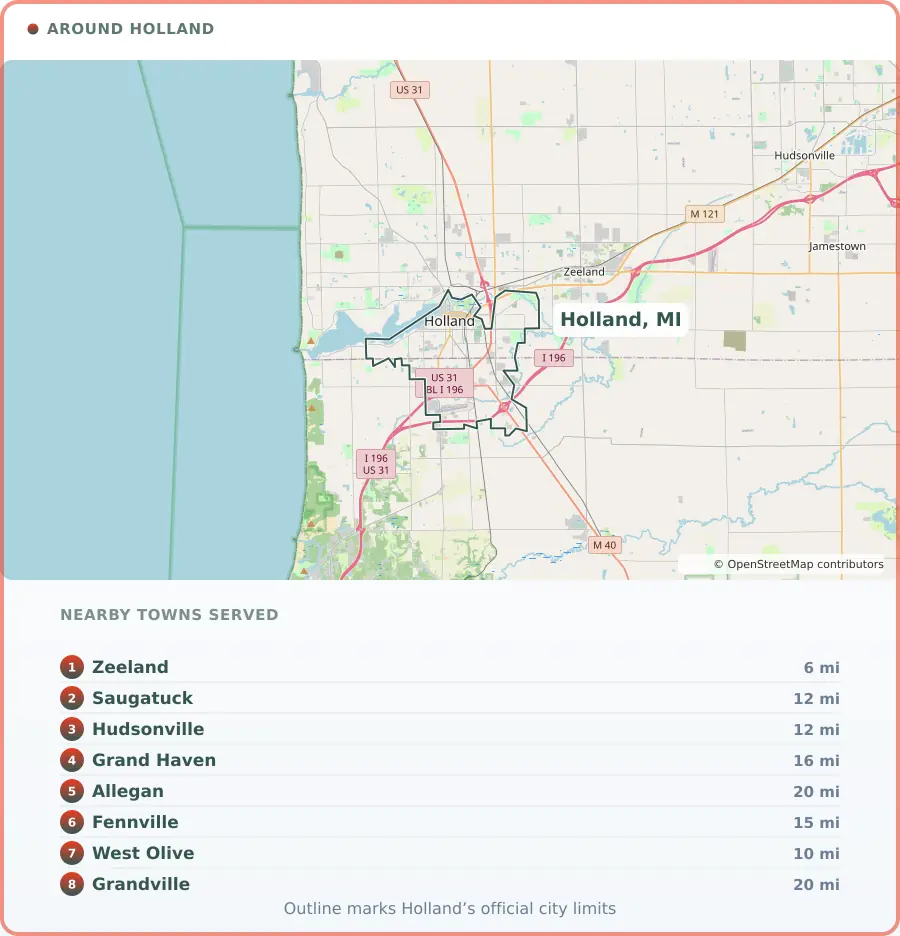
Based in Holland, MI, with 8 nearby communities inside the service area — near enough to reach quickly, not just listed on a map.
Holland, MI Information
Holland, Michigan sits along Lake Michigan's eastern shore, a city of roughly 34,000 with a strong manufacturing pulse. Haworth, LG Energy Solution, Gentex, and Magna keep advanced manufacturing, office furniture, and automotive and battery production humming, while longtime players like Padnos and ODL round out an industrial base built for the long haul. Hope College and Holland Hospital add steady education and healthcare jobs, and area farms and food processors tie the local economy back to the land.
Neighborhoods like Van Raalte and Holland Heights give the city a settled, homegrown feel, even as visitors pour in each spring for Tulip Time and summer afternoons at Ottawa Beach. It's a community where lakeshore tourism and shop-floor craftsmanship share the same zip code comfortably.

Photo: Billy Hathorn, CC BY-SA 3.0